

Back to Blog
If you live in Metro Atlanta, you have likely noticed a subtle but frustrating trend. It starts with your lights flickering during a heatwave or your microwave clock resetting, even though there wasn’t a major storm. These are not just random glitches; they are brownouts, and they are becoming a regular part of life from Buckhead to Blue Ridge.
While a blackout is a total loss of power, a brownout is a temporary drop in voltage. Your lights might dim, and your appliances might struggle to run, but the power doesn’t go out completely. At Perkins Generator Store, we have seen a massive increase in homeowners looking for protection against these “partial” outages. In 2026, the reasons behind Atlanta’s flickering lights are a complex mix of rapid growth, aging infrastructure, and the new digital economy.
Understanding why the grid is struggling is the first step in protecting your home and your expensive electronics. Here is why brownouts are growing more common across our city.
The Explosion of Data Centers in North Georgia
Georgia has recently become one of the top three data center hubs in the entire country. Thousands of massive, energy-hungry facilities have popped up in Douglasville, Alpharetta, and South Fulton to support the global surge in Artificial Intelligence and cloud computing.
Unprecedented Power Demand
A single large data center can consume as much electricity as 100,000 homes. When dozens of these facilities are concentrated in a single county, they place a continuous, heavy load on the local power grid.
- Continuous Draw: Unlike a residential neighborhood where power use drops at night, data centers pull maximum power 24 hours a day.
- Reduced Reserve Margin: Because these facilities use so much of the available supply, there is less of a “buffer” left for everyone else when temperatures spike and homeowners turn up their air conditioning.
The Rise of High-Tech Manufacturing
In addition to data centers, Georgia’s “Electric Vehicle Alley” and new battery manufacturing plants have brought thousands of new jobs to the state. However, these factories also require massive amounts of firm, reliable power that the grid was never originally designed to provide.
Aging Infrastructure in Established Neighborhoods
While Atlanta’s economy is moving at light speed, the physical grid, the poles, wires, and transformers in your neighborhood are often decades old.
The “Last Mile” Problem
Even if the power plants are producing enough electricity, the distribution lines that deliver it to your home are under immense stress.
- Overloaded Transformers: In older neighborhoods like Virginia-Highland or Decatur, the transformers on the poles were designed for the electrical loads of the 1970s. Today, with every home running multiple computers, smart appliances, and EV chargers, these transformers are often pushed to their thermal limits.
- Voltage Sag: When too many homes on a single circuit try to pull high amperage simultaneously, the voltage “sags,” resulting in a brownout for everyone on that line.
Winter Storms and “Fern” Fatigue
As we saw with Winter Storm Fern in early 2026, Georgia’s power infrastructure is particularly vulnerable to ice. The repeated stress of ice accumulation on lines, followed by rapid thaws and high winds, creates micro-fractures and weakened connections that lead to inconsistent voltage even on sunny days.
The Hidden Danger of Brownouts
Many homeowners think a brownout is less dangerous than a blackout because the power stays on. In reality, brownouts can be far more damaging to your property.
Damage to Sensitive Electronics
Most modern electronics, like your smart TV, refrigerator, and HVAC control board, are designed to run at a steady 120 volts. When that voltage drops during a brownout, the internal components have to draw more current to compensate. This creates excessive heat that can fry circuit boards and shorten the lifespan of your appliances by years.
HVAC System Failure
Your air conditioner’s compressor is one of the most expensive parts of your home. If it tries to start up during a low-voltage event, the motor can “stall,” leading to a burned-out compressor. Repairing this often costs thousands of dollars, making a brownout a very expensive event for an unprotected homeowner.
How to Protect Your Home
If you are tired of your clocks resetting and your AC struggling, there are proactive steps you can take to shield your home from the instability of the Metro Atlanta grid.
Whole-Home Surge Protection
Installing a high-quality surge protector at your main electrical panel is a great first step. While it doesn’t stop the voltage from dropping, it protects your home from the “spike” that often occurs when the voltage returns to normal after a brownout.
Standby Power Solutions
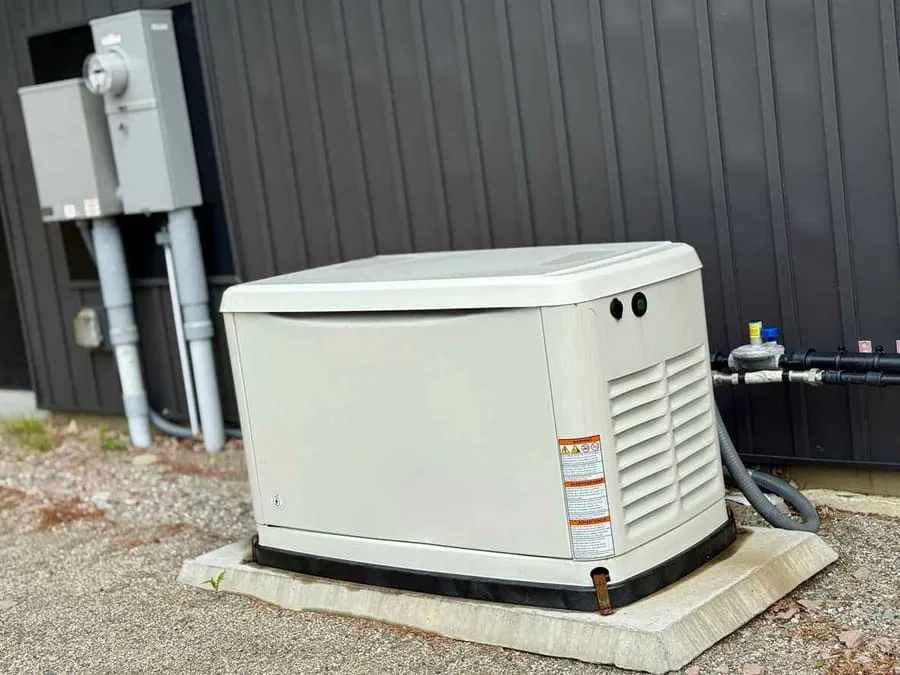
A standby generator from Perkins Generator Store is the ultimate defense. Modern standby generators are equipped with automatic transfer switches that constantly monitor the incoming voltage from the utility company.
- Automatic Sensing: If the voltage from the grid drops below a safe level (a brownout), the generator can detect the danger and automatically disconnect your home from the unstable grid, powering your house with clean, steady electricity until the utility stabilizes.
- Peace of Mind: You no longer have to worry if your HVAC or refrigerator is being damaged while you are away at work.
Taking Control of Your Power
The growth of Metro Atlanta is an exciting story of progress, but the growing pains of the electrical grid are a reality we all have to face. Between the massive demand from new data centers and the aging wires in our historic neighborhoods, brownouts are likely to remain a part of the Atlanta landscape for years to come.
You don’t have to be at the mercy of an imbalanced grid. By understanding the risks and investing in reliable backup power, you can ensure your home remains a sanctuary of comfort and safety.
Contact Perkins Generator Store today to find out how a standby generator can protect your Metro Atlanta home from the damaging effects of local brownouts.
Recent Posts
Navigating HOA Requirements for Generator Installations in Peachtree City and Alpharetta
The Atlanta Homeowner’s Guide to Generator Maintenance Before Hurricane Season
Generac vs. Kohler: Which Model Handles Metro Atlanta’s Humidity and Power Surges Best?
What Homeowners Should Do to Prepare Their Generator Before Atlanta Spring Storm Season
How Atlanta Thunderstorms and Lightning Strikes Increase the Need for Home Backup Generators
Generator Maintenance 101: The Semi-Annual Checklist Every Georgia Homeowner Must Follow